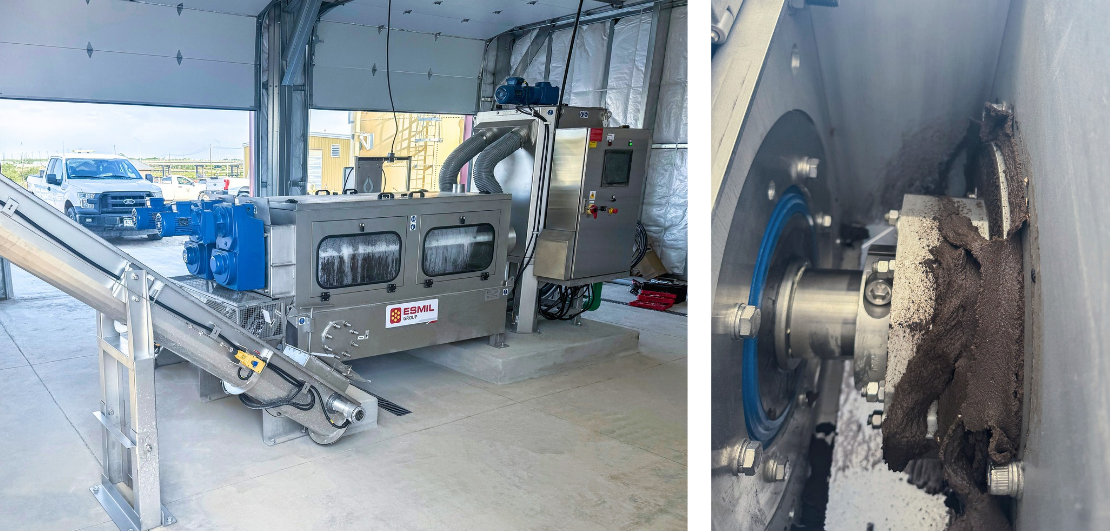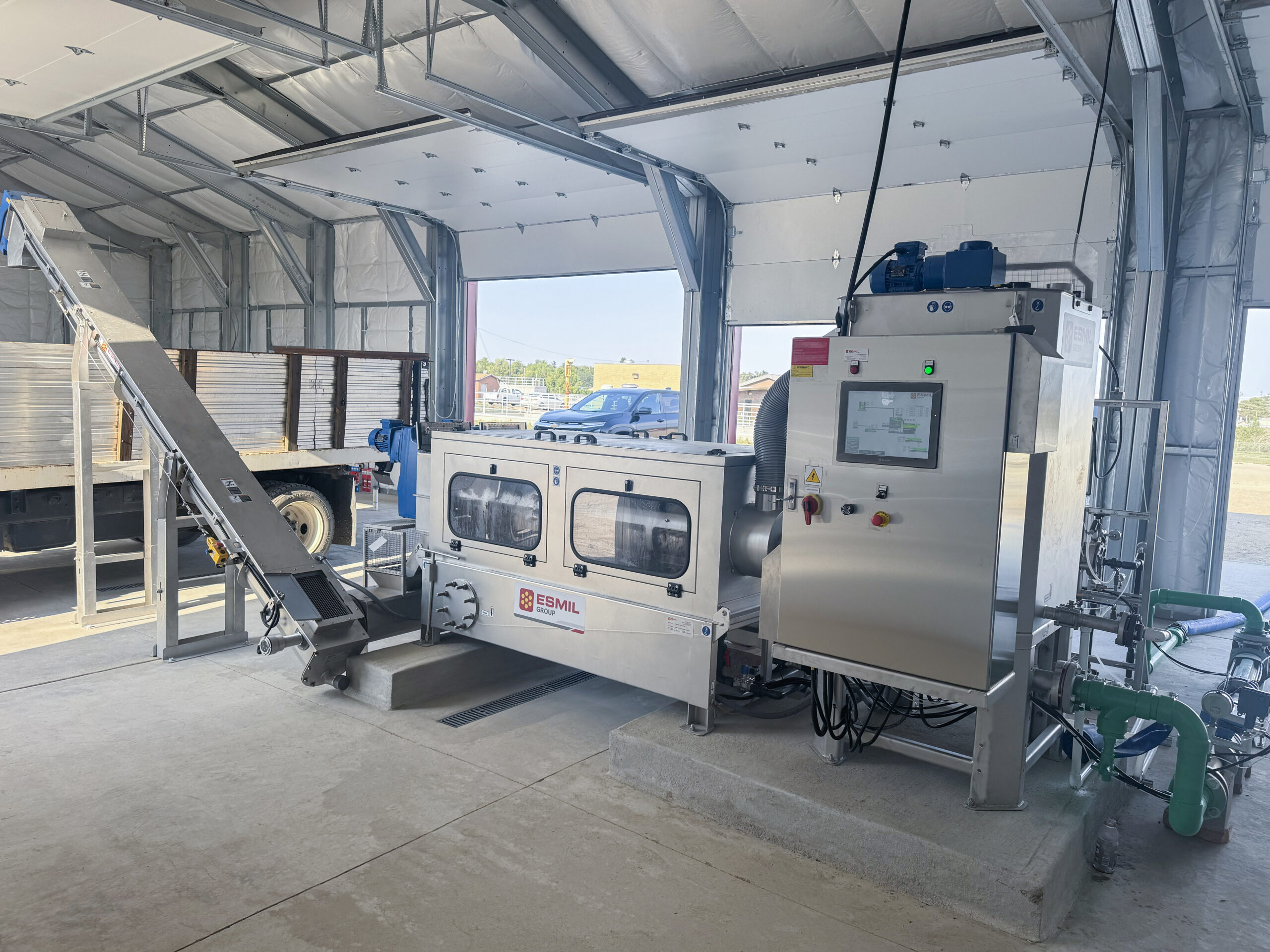
The La Junta Wastewater Treatment Plant in Colorado serves a community of approximately 7,000 residents. Due to the relatively small scale of the facility, a rented centrifuge had been used for sludge dewatering for an extended period.
While the centrifuge provided the required dewatering performance, rental and ongoing operating costs were becoming an increasing burden on the plant’s budget. Over the long term, investing in its own sludge dewatering system proved to be a more cost-effective option, providing the required process capacity while reducing operating costs.
The plant therefore decided to replace the rented centrifuge with its own mechanical sludge dewatering system. ESMIL Corp. was selected to design and manufacture the system.
From a centrifuge to an ESMIL sludge dewatering system
The decision to change dewatering technologies was not driven by problems with the performance of the existing centrifuge. The main consideration was the long-term economics of the process. In addition to rental costs, the centrifuge involved ongoing operating expenses associated with factors such as high energy consumption and wear of mechanical components due to its high-speed operation.
The plant therefore decided to invest in its own sludge dewatering system that would provide the required process capacity while reducing day-to-day operating costs. Based on the process parameters, ESMIL Corp. specialists selected a system configuration consisting of:
- Two MDQ-402 Multi-Disc Screw Presses, providing a combined hydraulic capacity of 40 GPM (9 m³/h)
- An integrated screw conveyor system for continuous removal and transport of dewatered sludge
Reducing operating costs with MDQ Multi-Disc Screw Presses (ESMIL–Tsurumi)
The design of the MDQ Multi-Disc Screw Press helps reduce energy and wash water consumption as well as day-to-day maintenance requirements:
- Low energy consumption – the low-speed design of the MDQ dewatering press, operating at just 1-2 rpm, results in low energy demand.
- Reduced wash water consumption – the arrangement of alternating fixed and moving discs continuously cleans the filtration gaps, reducing the amount of wash water required.
- Reduced maintenance requirements – low-speed operation reduces mechanical wear, resulting in lower day-to-day maintenance and service requirements.