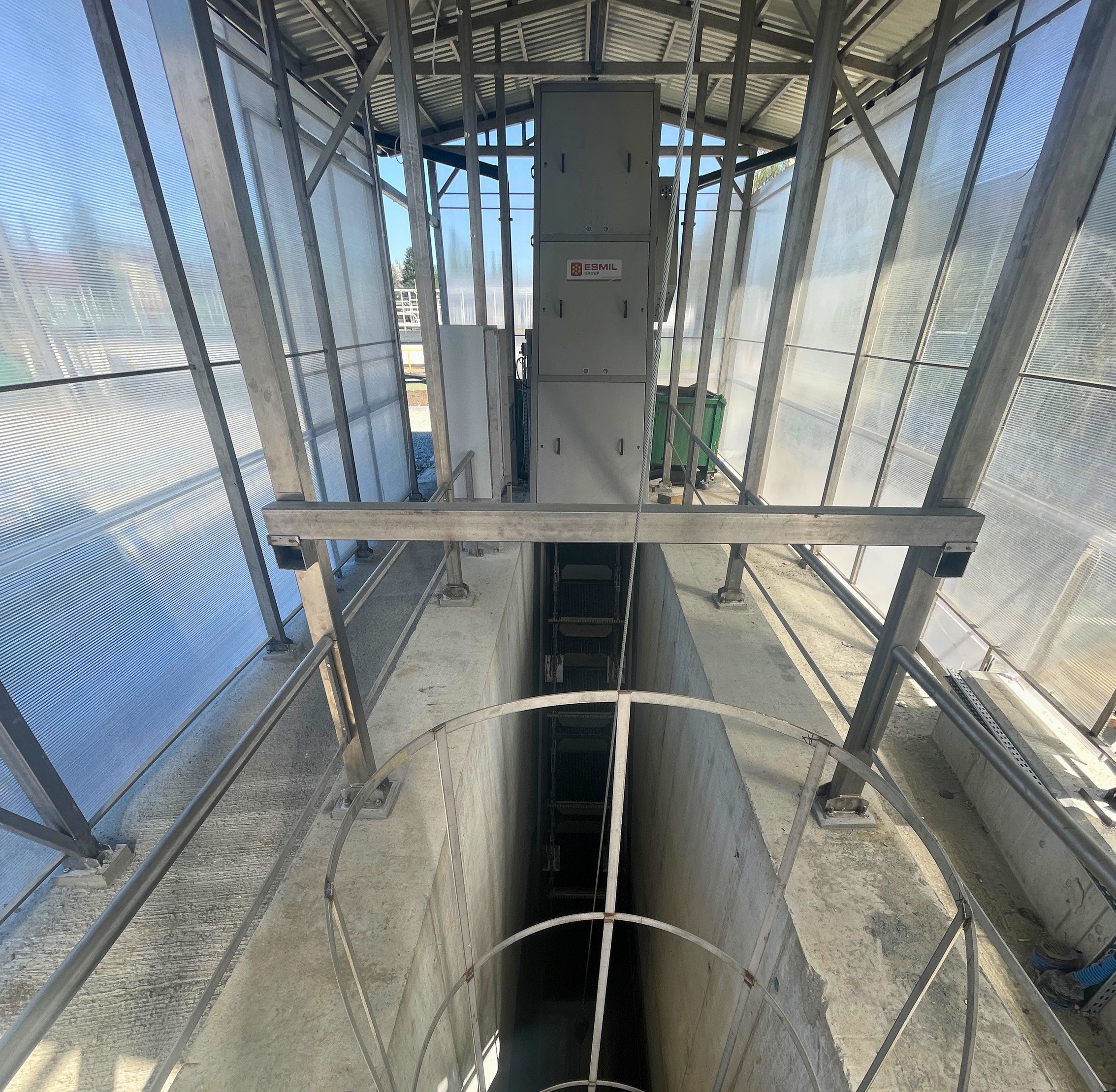
As part of the expansion of the wastewater infrastructure in Sucha Beskidzka (Poland), a new bypass channel was constructed and equipped with an ESMIL KR 1054 catenary screen. The unit is responsible for the mechanical treatment of wastewater and the removal of large and medium-sized solids carried in municipal wastewater.
The addition of a bypass channel enables the safe diversion of wastewater during periods of increased inflow, maintenance activities, and future infrastructure upgrades. This allows the treatment plant to maintain continuous operation even when work is being carried out on the main treatment line.
The Role of the ESMIL Catenary Screen in the New Bypass Channel
The new channel, measuring 1.1 m in width and approximately 5 m in depth, was equipped with an ESMIL KR 1054 catenary screen, associated equipment, and a control cabinet.
The screen is designed to capture large and medium-sized solids transported with municipal wastewater, including bottles, cans, plastic items, and other debris that could interfere with the operation of downstream treatment equipment.
The unit was designed to operate at an average daily flow of 7,000 m³/day and a maximum hourly flow of 420 m³/h.
Key screen parameters:
- Bar spacing: 10 mm
- Height: 8.75 m
- Width: 1 m
- Screening width: 810 mm
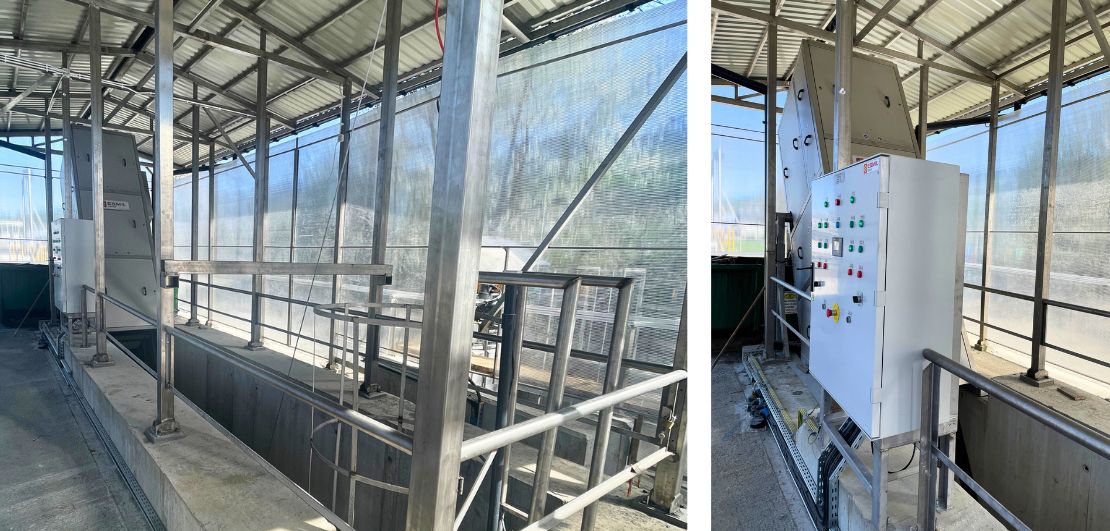
Designed for Demanding Operating Conditions
ESMIL catenary screens have been developed for operation in demanding environments characterized by variable hydraulic loads and the presence of large or irregular solids.
The design features support stable and safe operation even under changing wastewater flow conditions.
What Makes ESMIL Catenary Screens Different?
- A specially designed stainless steel support chain that minimizes the risk of jamming while enabling the transport of large solids
- Reinforced frame construction designed for high hydraulic loads and variable flow conditions
- Submerged components manufactured from corrosion-resistant materials; the design eliminates submerged lower chain sprockets and underwater bearings
- Automated control system allowing operation based on wastewater level in the channel or according to a pre-programmed schedule
Why Is Mechanical Wastewater Treatment So Important?
Mechanical treatment serves as the first line of protection for downstream process equipment. Effective removal of solids helps reduce the risk of overloading, equipment damage, and unplanned downtime, supporting the stable operation of the entire treatment plant.
Summary
The project in Sucha Beskidzka demonstrates the important role that a properly designed mechanical treatment stage plays in modern wastewater treatment facilities. The installation of an ESMIL catenary screen in the new bypass channel increases the operational flexibility of the plant and supports stable operation during future upgrade works as well as periods of increased wastewater inflow.