Due to their properties, poppy seeds are widely used in the food, pharmaceutical and cosmetics industries. Depending on their intended use, the raw material undergoes appropriate preparation processes, including washing.
The wastewater generated during this process contains high levels of organic substances, including morphine. Due to its potential environmental impact, morphine must be effectively removed from the wastewater, requiring an appropriately selected treatment technology.
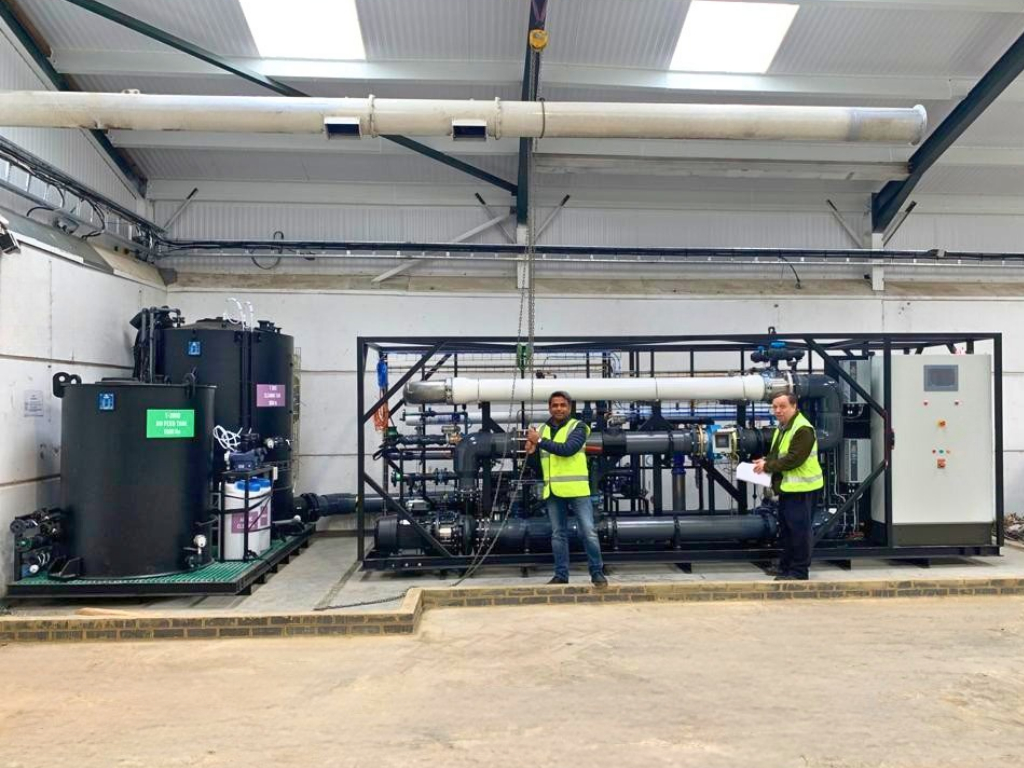
One of ESMIL’s projects involved developing a wastewater treatment system for a poppy processing plant in the United Kingdom. The facility is located a considerable distance from the nearest municipal wastewater treatment plant. Due to the high cost of transporting wastewater off site, the decision was made to install an on-site system for wastewater treatment and water recovery.
The system was based on a two-stage membrane process combining ultrafiltration (UF) and reverse osmosis (RO). The objective was to reduce the volume of wastewater requiring off-site transport and disposal while also reducing fresh water consumption by reusing the recovered water in the rinsing process.
The system achieved 80% hydraulic recovery while meeting all process objectives and water quality requirements.
Design requirements and scope of work
The membrane system designed by ESMIL was required to meet clearly defined technical and process requirements, including:
- Treatment capacity of 1.5 m³/h
- Minimum hydraulic recovery of 80%
- COD (Chemical Oxygen Demand) in the treated stream < 500 mg/L
- Morphine concentration < 50 mg/L
In addition, the system was designed with a modular configuration and a high level of automation to ensure simple operation and stable performance.
These design criteria were based on the requirements of the production process and the need to achieve recovered water quality suitable for reuse in the rinsing process.
Comprehensive process analysis
Every ESMIL project begins with a detailed analysis of the process and wastewater characteristics. The results provide the basis for selecting the appropriate technology and system operating parameters, which are then verified through testing under conditions that closely reflect actual operation or directly on site. This approach helps reduce project risk and ensures that the system is tailored to actual operating conditions.
For our customers, this means more predictable operating performance and a system designed around the specific process rather than average design data. This approach also helps optimise both operating costs (OPEX) and capital expenditure (CAPEX).
For this project, the work involved two key stages. The first was an analysis of the input data and laboratory testing of the process wastewater at ESMIL’s laboratory in High Wycombe, UK. This made it possible to verify the initial assumptions before the system was built and reduce the risk of selecting an unsuitable treatment technology.
The next stage involved extended testing using industrial membrane modules. The tests were conducted under conditions closely reflecting actual operation, allowing the operating parameters to be confirmed and the process to be optimised.
Process description
The wastewater generated during poppy seed washing contained high concentrations of organic contaminants, with COD of approximately 15,000 mg/L, as well as total suspended solids of approximately 1,000 mg/L.
To achieve high separation efficiency while maintaining stable operation of the membrane system, the wastewater was cooled to below 25°C before entering the system.
The treatment process consisted of two stages: ultrafiltration (UF) and reverse osmosis (RO). Before the system was developed, laboratory testing was carried out using a batch-mode test technique to evaluate process performance and determine the design parameters.
Stage 1. Ultrafiltration
During ultrafiltration, suspended solids and some high-molecular-weight organic compounds are removed from the wastewater.
The concentrate containing the retained contaminants is directed to the wastewater tank, while the treated permeate is transferred to the feed tank for the next stage of the process: reverse osmosis.
Stage 2. Reverse osmosis
The permeate produced during ultrafiltration still contains residual dissolved organic and mineral compounds and is therefore directed to the reverse osmosis stage. This further reduces COD to a level that allows the recovered water to be reused on site.
The concentrate generated during reverse osmosis is returned to the wastewater tank and subsequently transported off site for disposal. The resulting permeate is high-quality recovered water suitable for reuse in the rinsing process.
Combining two consecutive membrane processes made it possible to take advantage of the strengths of each technology. Ultrafiltration removes suspended solids and high-molecular-weight contaminants, providing permeate of suitable quality for effective operation of the reverse osmosis system. Reverse osmosis provides the final polishing step, removing dissolved organic compounds, including morphine.
Results achieved on site
Detailed results achieved during operation are presented in the table below.
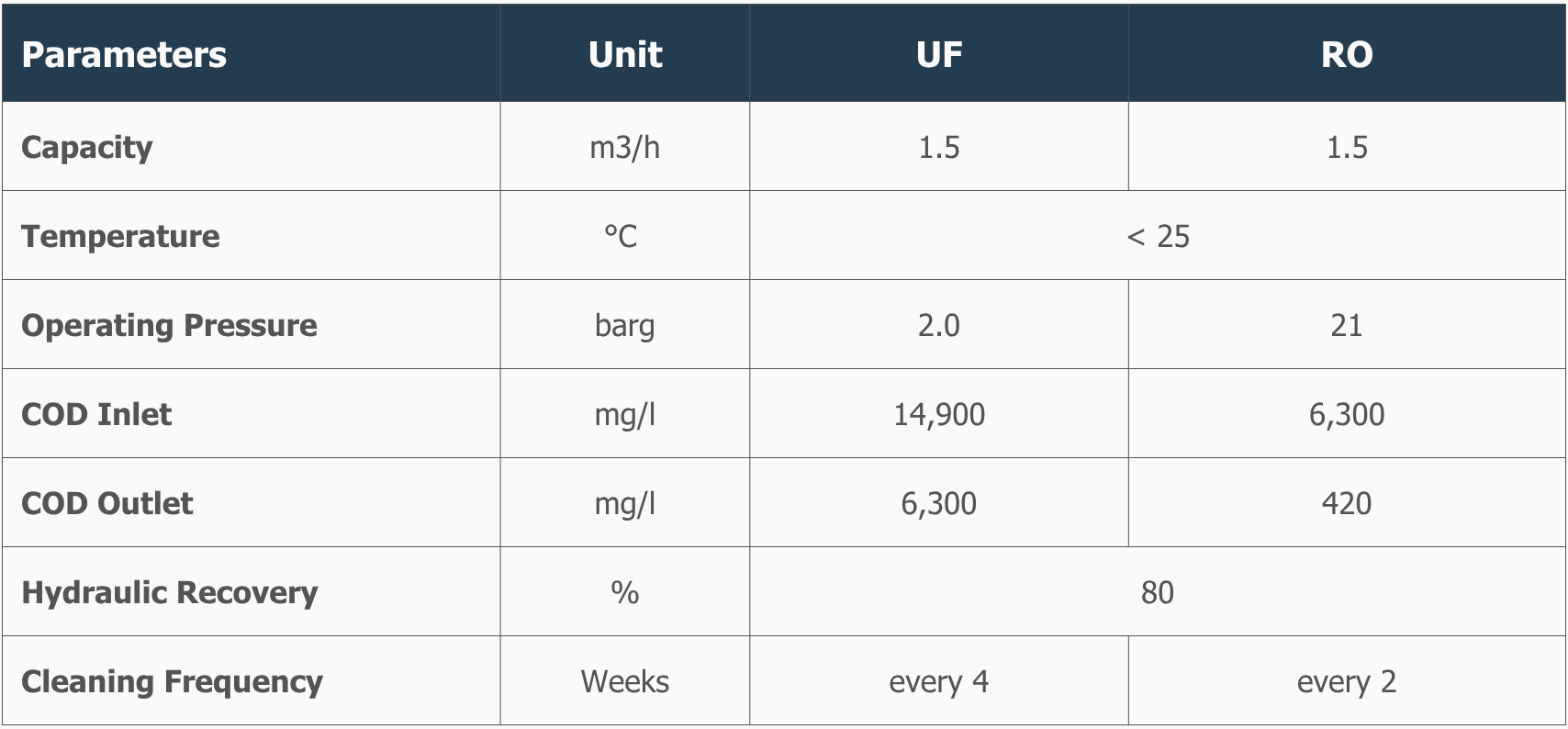
The results confirmed the effectiveness of the proposed process configuration and demonstrated that all design requirements were met. In particular:
- COD was reduced from 14,900 mg/L to 420 mg/L using the two-stage ultrafiltration and reverse osmosis system
- Hydraulic recovery reached the target level of 80%
- The quality of the recovered water allowed it to be reused on site
Business impact
Implementing the membrane system enabled the customer to reduce the volume of wastewater requiring off-site transport and disposal by five times while also reducing fresh water consumption through water reuse within the process.
The system resulted in lower operating costs and greater independence in water management. At the same time, it enabled more efficient use of water resources and reduced the amount of waste generated during production, supporting the plant’s circular economy objectives.
Summary
At ESMIL, every membrane project begins with a detailed analysis of the process and wastewater characteristics. Only then do we select the system configuration and verify its performance under conditions that closely reflect actual operation.
For our customers, this means much more than simply selecting the right technology. It allows investment decisions to be based on verified process data, reduces implementation risk and provides greater confidence that the required treatment and water recovery targets will be achieved.
The poppy processing plant demonstrates how a properly designed membrane system can meet environmental requirements while reducing operating costs and supporting more efficient use of water resources.
If you are unsure whether membrane technology is suitable for your process, you do not have to make that decision based on assumptions alone. We can test your wastewater, evaluate its treatment potential and use the results to develop a system tailored to your specific application – just as we did for the facility described in this case study.