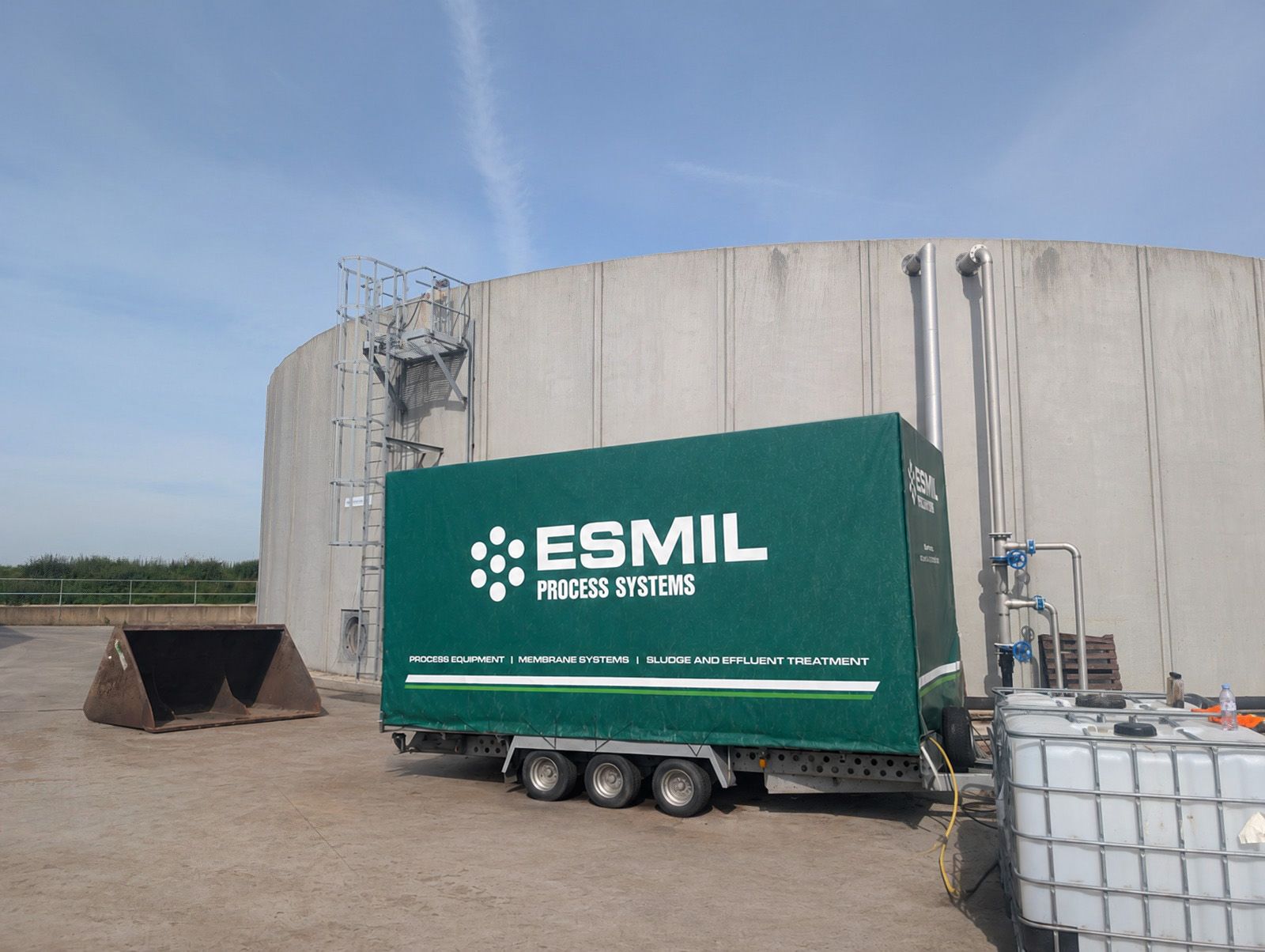
Anaerobic digestion breaks down biodegradable organic materials, such as livestock slurry and crop feedstocks, into biogas, a renewable source of energy. A by-product of this process is digestate – a nutrient-rich material that, following appropriate treatment, can become a valuable source of recoverable resources.
But how can digestate be processed efficiently while recovering as much of its valuable content as possible? To answer this question, ESMIL conducted a series of trials using an MDQ Multi-Disc Screw Press with a pilot membrane system incorporating Superfiltration (SF) and Reverse Osmosis (RO).
Demonstration of the ESMIL digestate treatment system
The ESMIL UK team demonstrated an integrated treatment system combining the ESMIL-Tsurumi MDQ Multi-Disc Screw Press with a membrane installation incorporating Superfiltration (SF) and Reverse Osmosis (RO).
The demonstration used digestate produced from cattle slurry and crop feedstocks.
The trials confirmed the effectiveness of the integrated solution under real operating conditions and attracted considerable interest from representatives of the anaerobic digestion sector. As a result, ESMIL was invited to carry out laboratory jar testing on digestate from another AD facility. In this case, the feedstock consisted of digestate produced from poultry manure and maize.
Treating digestate from poultry manure and maize
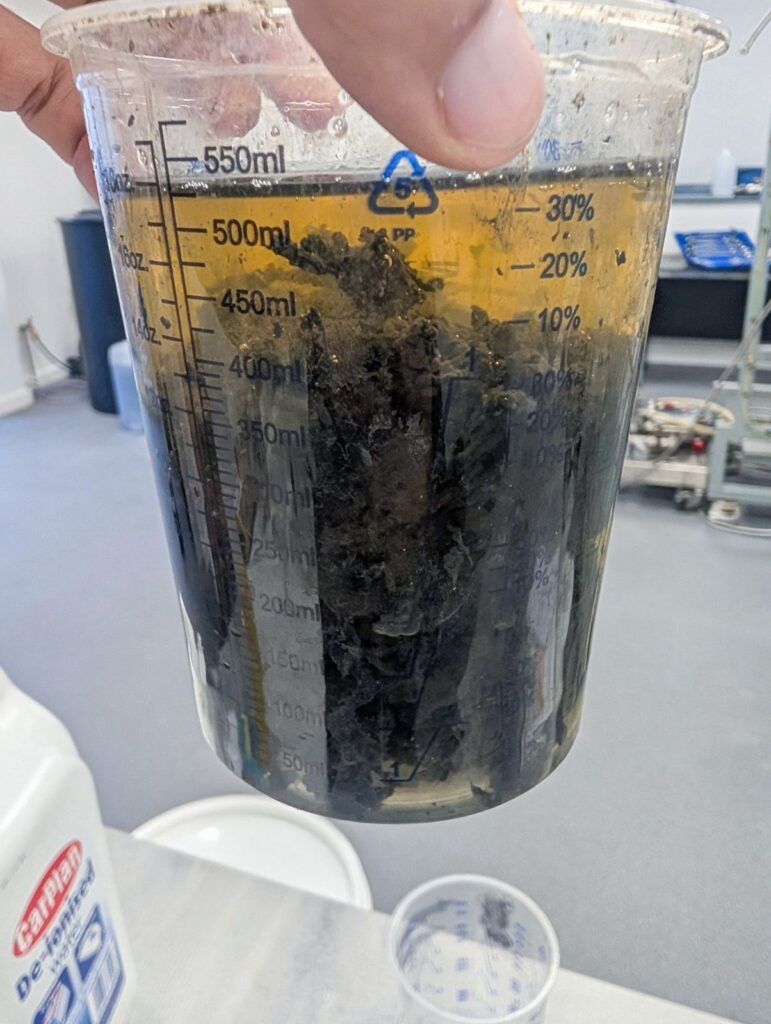
The digestate had a dry solids content of 7.3-7.5% and exhibited high viscosity, making both chemical conditioning and subsequent dewatering particularly challenging.
Laboratory testing carried out by ESMIL specialists showed that stable floc formation and effective solid-liquid separation required dilution of the digestate, followed by carefully optimised dosing of ferric chloride and a cationic polymer.
Based on these results, an optimum chemical conditioning strategy was developed and subsequently verified during pilot trials using the ESMIL-Tsurumi MDQ Multi-Disc Screw Press.
Digestate dewatering with the ESMIL-Tsurumi MDQ Screw Press
The laboratory results established the optimum chemical conditioning strategy and provided the basis for the next stage: pilot trials conducted under full-scale operating conditions.
A pilot MDQ-201 Multi-Disc Screw Press was installed on site to validate the proposed process and optimise operating parameters.
The trials confirmed excellent dewatering performance, achieving:
- 22.1% dry solids content in the dewatered cake
- 0.1–0.2% dry solids content in the filtrate
The pilot testing also demonstrated that chemical consumption could be significantly reduced compared with the dosages established during laboratory testing.
Filtrate polishing with the ESMIL membrane system
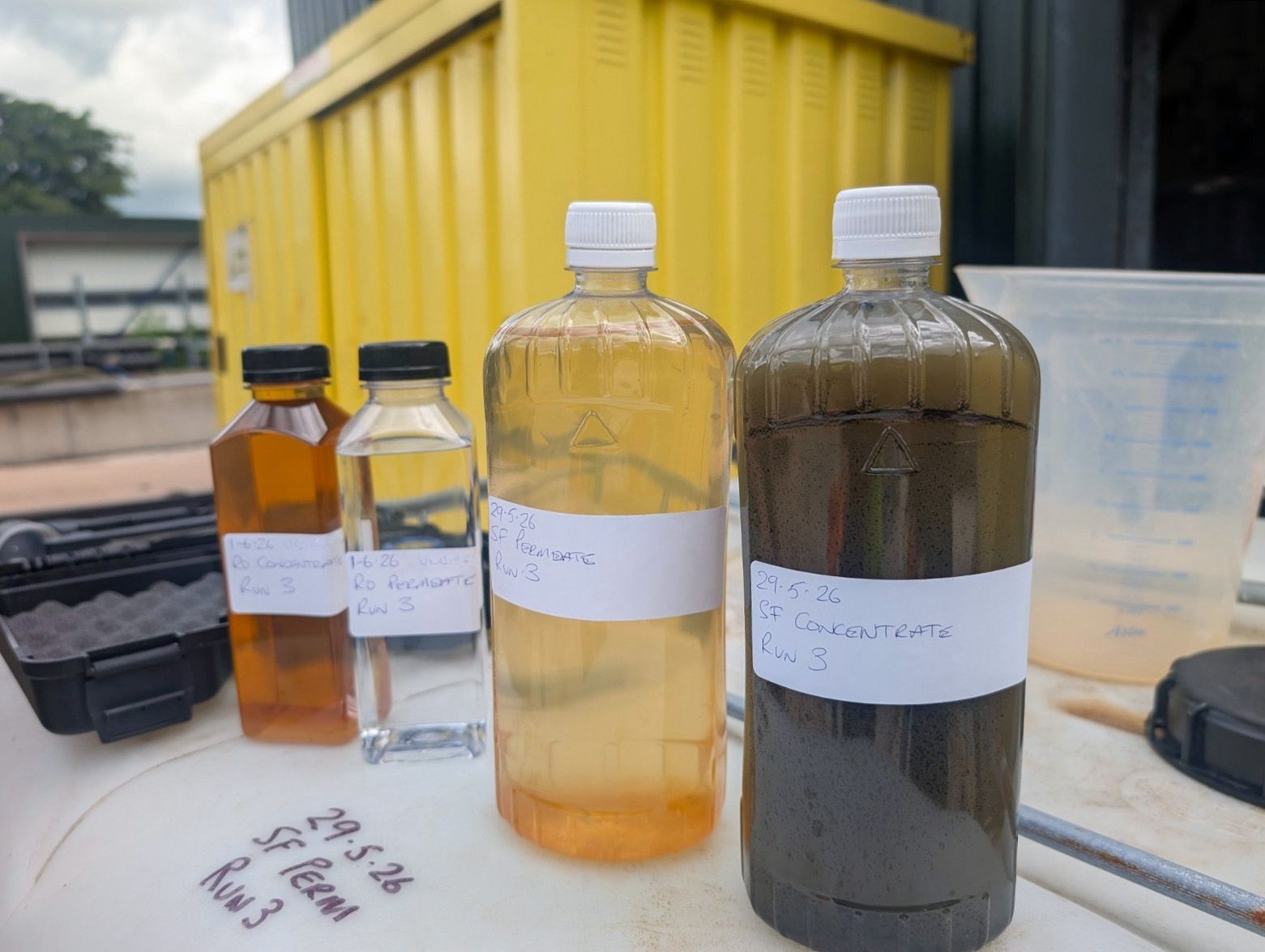
The filtrate produced during dewatering was subsequently treated using an ESMIL membrane system incorporating Superfiltration (SF) and Reverse Osmosis (RO).
The membrane process separated the filtrate into two valuable streams:
- a nutrient-rich concentrate suitable for use as a fertiliser product
- treated water suitable for reuse within the process
This approach not only reduces waste generation but also maximises the recovery of valuable resources contained in the digestate.
From pilot trials to a full-scale installation
Following completion of the pilot testing, the MDQ Multi-Disc Screw Press remained on site, allowing the customer to continue operating the system under real process conditions.
During this period, the press operated reliably and consistently, confirming the robustness of the process and giving the customer greater confidence in proceeding with a full-scale installation.
The results exceeded the original project expectations and provided a solid foundation for designing a full-scale system tailored to the customer’s specific operational requirements.
Benefits of the integrated digestate treatment system
The trials demonstrated that combining digestate dewatering with membrane treatment not only improves digestate management but also reduces the operating costs of an anaerobic digestion plant.
Reusing the treated water, for example, for polymer make-up or digestate dilution, reduces fresh water consumption. At the same time, reducing the volume of dewatered digestate lowers transport, storage and disposal costs.
An additional benefit is the recovery of nutrients concentrated in the concentrate stream, which can be used as a valuable fertilizer product.
For AD plant operators, this means lower operating costs, more efficient resource utilisation and increased value from anaerobic digestion by-products.
At ESMIL, we design and deliver complete digestate treatment systems, combining expertise in chemical conditioning, dewatering and membrane processes. By tailoring each solution to the customer’s specific requirements, we help maximise plant performance, reduce operating costs and unlock the full value of anaerobic digestion by-products.